
Addressing the Stigma Around Mental Health in Schools
Abstract
Within high school counseling programs, social and emotional support tends to be underutilized by students. A school-wide survey at Ralston Valley High School revealed less than half of students felt comfortable accessing a counselor for social/emotional support, which differed significantly from the proportion of students who were willing to talk to a counselor for academic support (93%). This Youth Participatory Action Research (YPAR) study aimed to qualify the potential causes for the observed stigma around social/emotional support through several cycles of data collection. First, researchers collected ethnographic field notes derived from student participants in focus groups (n = 31). From these focus groups, it was determined that there is a need for more effective education around mental health in our school. This insight led researchers to the second method of data collection: a pre- and post-test on an integrated mental health and biology lesson to test the effectiveness of a new type of mental health education (n = 262). Researchers then wanted to ensure perspectives were gathered from as many stakeholders as possible and as such conducted a school wide teacher questionnaire regarding their opinions around mental health in school (n = 29). Finally, researchers explored how effective methods of mental health education could be implemented into the classroom. Researchers conducted observations of student success and engagement in classes with teachers undergoing more specific training to support social-emotional learning within the context of their normal content instruction.
Summary
Various empirical studies, conducted in recent years, demonstrate a significant upward trend in the rates of mental health challenges, especially among teens and young adolescents. These studies highlight dramatic spikes in anxiety, depression, and suicide over recent decades. Despite such high levels of mental illness, rates of untreated mental illness are among the highest they have ever been in US history. In fact, less than half of 12 to 25-year-olds who report suffering from depression received treatment (Youth Mental Health: Trends and Outlook, 2020). Even when there is treatment readily available, students do not often access these resources. More than half (55%) of students who reported needing mental health services say they didn’t access them because they felt embarrassed or scared that their peers would find out (Stanford, 2023). Although some mental health trends have been studied in detail, less attention has been paid to the stigma around mental health and the effect this stigma has on those who suffer from mental illness. One such study, conducted by researchers in Spain evaluated 280 secondary students using the Community Attitudes towards Mental Illness (CAMI) questionnaire. From there, different methods of intervention were applied, and students retook the CAMI questionnaire. The study concluded that intervention must take place at school: “Education is fundamental to improve understanding of mental health, reduce stigma and improve access to care… it is a good idea to create intervention programs in schools, with the objective of counteracting these stereotypes before they arise” (Vila-Badia et al., 2016). The intervention and education involved in this study consisted of students watching a documentary about mental health and then participating in a brainstorming session with mental health experts. However, this intervention spanned merely a month and does not necessarily prove these intervention techniques effective in the long run. It was also questioned if there may be more effective ways to destigmatize mental health than to take away students’ time in school.
Another study followed a youth-led approach in which high school students trained in the S.P.E.A.K. (Share, Peace, Equality, Awareness, and Knowledge) program conducted presentations to middle school students who attended an after-school program that described common mental health disorders, the stigma surrounding them, as well as appropriate ways to help oneself or others during times of emotional distress. This study found a decrease in mental health stigma for the students who were presented to, supporting the effectiveness of brief interventions for mental health education (Bulanda et al., 2014). However, this study fails to consider the longevity of these interventions and if the information taught actually stays with the individuals who learned it. A cogent example of how mental health stigma and related impacts could be addressed, was looked at in a UK based study (Barwick, Chigwada, Giecco, Seeney, Turner, & McPartlan, 2023), specifically under the framework of YPAR. Instead of focusing directly on adult methods of intervention, the research team looked at trust between students and adults at school. Researchers found a lack of trust between students and teachers, on top of which, students revealed they would rather open up to a peer than an adult in the school. The only other pertinent study we’ve found was a meta-analysis, which collected data from several studies regarding the effectiveness of school-based interventions on mental health stigma. The study concludes there is not enough available evidence to support that current methods of school-based interventions reduce the stigma of mental illness in young people (Barwick et al., 2023). While there are some studies regarding the stigma around mental health at school, there are still no concrete solutions to reducing said stigma. In addition, while there are very few studies around this topic in general, there are even fewer in the United States. While it is generally assumed that an increase of available mental health resources will lessen this disparity and allow sufficient access to mental health resources for all who need them, our YPAR research suggests that an increase of resources is not sufficient by itself in ensuring those in need of mental health treatment are able to receive it.
Context
The disparity between the number of students who suffer from mental health illnesses and the number of students who are comfortable receiving treatment for such illness became apparent at Ralston Valley High School after a school-wide needs assessment was conducted. Ralston Valley High School is a comprehensive high school, serving grades 9-12, located in Arvada, Colorado, with a total enrollment of approximately 1,900 students. An annual school wide needs assessment is conducted at Ralston Valley each year. Participation in the assessment is completely voluntary. Those who opt-in answer questions about their academic experience and social emotional wellbeing. Needs assessment data is then used to iterate and adjust student support programs at Ralston Valley. In the fall of 2022, 1,536 students (80.8% of the student body at Ralston Valley) responded to the needs assessment. In reviewing the data, a significant element of the student experience stood out: 93% of students surveyed reported feeling comfortable speaking to their school counselor about academics while only 47% of students reported feeling comfortable speaking to their school counselor regarding mental health. Furthermore, only 39% of students who reported significantly struggling with mental health felt comfortable speaking to their counselor about their mental health concerns. This data highlighted a significant disparity between students who felt comfortable speaking to their counselors regarding academics versus students who felt comfortable discussing mental health or personal/social concerns with their counselor. It became clear students were comfortable talking to their counselors about academics, yet uncomfortable talking specifically about mental health. As such the following research question was formed: How does the stigma around mental health affect students’ willingness to access mental health resources at school?
Project Goals and Design
This project was conceived as Participatory Action Research involving youth leaders at Ralston Valley High School. The research question and process were developed using the tenets of YPAR, which is an innovative approach to positive youth and community development. YPAR allows young people to conduct research to better understand, diagnose and suggest changes to systems that are intended to serve them. As the YPAR team delved into the research question, it became apparent that understanding the root causes of this potential stigma would be critical in grounding the other elements of the YPAR project. With our research question established, we devised our methodology in line with traditionally accepted processes within YPAR. Recognizing the value of student voice and seeking to better understand the discrepancies from the baseline needs data, we opted to conduct focus groups. The research team marketed the opportunity to participate in the study to a diverse array of community members. Those who volunteered to participate were placed in a small group of four to ten students and received a set of questions that could be freely discussed with opportunities for follow-up and discussion among group members. The research team tested several questions in an effort to find those that would stimulate the most authentic and relevant responses. Ultimately, six questions were utilized across all groups, with organic follow-up questions being layered in where applicable. The questions were formulated to better understand narratives around school impacts on mental health and how students perceive both the availability of mental health education and resources at school. By employing this approach, we aimed to capture a nuanced understanding of students’ attitudes and experiences related to mental health stigma and resource utilization. In total, data was collected from 31 students. Afterward, the research team started to evaluate the data through a specific thematic analysis protocol, using qualitative coding to break down specific student quotes into themes and explanations. Researchers were seeking to understand elements from the focus groups that addressed the research question and the lack of willingness to access mental health resources. Upon synthesizing these findings, two notable themes emerged.
- Students felt embarrassed to access mental health resources.
- Students felt there was a lack of effective mental health education within the school curriculum.
Given the inherent difficulty of altering an unconscious stigma pervasive in a population, researchers decided to first focus on the lack of effective mental health education at Ralston Valley. At the time, the only class in which mental health lessons were taught was in ninth grade Advisement. Once a week, for fifty minutes, freshmen would attend their Advisement class in place of an off block. The “off-block” was a designated free period during the seven-period class schedule. Six courses constituted a full class load, but the Advisement period was added once a week to support transition to high school, SEL and study skills. Students learned about tools and techniques to study and stay organized in school as well as mental health and the resources available to support them. Students reported that this mental health education did not seem useful. Because the topic of mental health was so uncomfortable, adding another class with the purpose of discussing mental health was not effective as students were reluctant to participate. Researchers questioned if there was a more effective way to educate students on the foundational aspects of mental health. It was hypothesized that students would be more open to learning about mental health if lesson(s) were taught in a more relevant and comfortable setting. For instance, researchers wondered if students would feel more open to discussing mental health if the lesson was paired with a curriculum they were already used to. It was theorized that embedding such content within an established academic framework, would foster a greater awareness of mental health issues among students in a more comfortable way, eventually leading to a potential shift in the stigma around mental health. Because mental health is so closely linked with certain mechanisms of human biology, researchers questioned if students would be able to learn more effectively if a mental health lesson was integrated into a biology lesson. This offered a few positive catalysts that were more likely to support enhanced understanding of mental health:
- When looking at biological systems at a cellular or mechanical level, a lot of the emotion and potential stigma about the inner-working of these systems could be removed.
- Since all humans have the same general framework for biological and physiological responses, tying mental health concepts and outcomes to these mechanisms would create easier to understand associations and reduce peer-to-peer judgment.
This approach would normalize many of the feelings individuals have when they experience a struggle with their own mental health. Working closely with the Biology department at Ralston Valley, researchers were able to develop and integrate a mental health lesson about anxiety to the already established biology curriculum covering the nervous system. Researchers were then able to examine the effectiveness of pairing mental health lessons with students’ normal content, as discussed in further detail in the data methods and outcomes on Cycle 2. Through a vigorous reflection process, one of the core tenets of action research, the research team was able to determine what information they learned through the initial cycle (focus groups). Applying that information, surfacing lingering questions, and reviewing the overall system for additional intervention opportunities, the YPAR team was able to land on the most effective option to proceed to the next cycle. This process of vigorous reflection was employed with similar thought and care at the conclusion of each project cycle to establish consistency in methodology and decision-making through the duration of the study.
Data Methods and Outcomes
Cycle 1: Focus Groups
In February of 2023, 31 Ralston Valley High School students in grades 9-12 volunteered to participate in the focus groups (male = 14; female = 17). Each focus group consisted of between four and ten participants, led by the student researchers. Students were free to skip any questions they did not want to answer and were free to excuse themselves at any time. Student participants also signed a confidentiality agreement allowing the focus groups to exist in a safe, judgment free space. Students were asked a variety of questions regarding their attitudes around schoolwork, the social emotional support they are provided at school, and the attitude around mental health in their homes. Follow up questions were asked when applicable and discussions between focus group members also occurred. Overall, questions aimed to discover if there was a stigma around accessing mental health resources at school, and if so, what was contributing to that stigma. The focus group questions involved gathering students’ perspectives on mental health in school and led to informative discussions on mental health resources, interventions, and student background knowledge. These focus groups concluded with solution focused questions to gather insights on what the student body saw as potential remedies to the issue of mental health stigma.
Two major themes emerged in the student responses: perceived judgment around support and lack of effective education. Students reported feelings of awkwardness around speaking to an adult about their mental health. One student stated, “There is that awkward barrier of, oh, this is an adult, I don’t normally talk about my emotional problems with adults.” Speaking with an adult about mental health is simply an uncommon practice for many students at Ralston Valley. As such, many simply choose not to. In 2020, a program called Peer Counseling was put into place at Ralston Valley to help to lessen the stigma around accessing mental health resources at school by giving students a trusted person to speak to who was their age and could potentially relate more easily to their issues than an adult. While this program has been incredibly beneficial to many students, the focus groups revealed many student participants reported feeling scared at the prospect of speaking to a counselor or even a peer counselor about their social and emotional needs. One student reported, “I kinda feel scared and embarrassed to go to a peer counselor.” Many students expressed that asking for support with their mental health is an embarrassing thing to do. This revealed a theme of stigma at Ralston Valley High School around accessing mental health resources. Students also reported a lack of effective education about mental health at Ralston Valley. In 2022, Ralston Valley established a program of freshman Advisement in which 9th graders were taught weekly lessons on academic tools and social-emotional strategies. However, student participants stated that after freshman year there was a severe lack of education around mental health. One student described “There’s the freshman Advisement, but after that, there’s 1,900 kids that don’t learn anything else.” However, many students do not believe that freshman Advisement consists of effective education in the first place. Most mental health lessons in Advisement consist of intense topics such as suicide prevention. A student advocated, “I think we should talk about smaller cases like stress management and stuff like that instead of a worst-case scenario.” Most students are not dealing with suicide on a daily basis and as such students felt lessons about less extreme mental health issues may be more relevant and beneficial. Overall, it is clear that many students do not feel comfortable speaking to others about their mental health and that the education around mental health at Ralston Valley is less than effective.
Cycle 2: Biology Lesson
The focus group data made it clear there was a lack of effective education in Advisement classes. It was postulated that integrating mental health lessons directly into a relevant core class could be more effective, as it offers different stakes for students and provides a relevant “on-ramp” to the content. Biology was the logical first choice for implementation of further mental health education. All humans have biological mechanisms which influence how they experience subconscious thoughts and behaviors. The hypothesis for this cycle of research was students would perceive their mental health differently after learning more about the normal mechanisms at their biological core. This would serve to demystify and destigmatize mental health constructs and normalize the biological and physiological mechanics of being human. At Ralston Valley, all 10th grade students are enrolled in either Biology or Honors Biology. Working closely with the Biology Department, the YPAR team designed a mental health lesson about the relationships between the nervous system and the stress and anxiety response. Students were already in the process of learning the fundamental elements of the nervous system prior to deploying the YPAR team lesson, which gave students a clear baseline to better process the mental health education. The lesson began with a pre-test to qualify students’ pre-existing knowledge around anxiety and its relationship to the sympathetic and parasympathetic nervous systems. The pre-test also asked students about their confidence in understanding their mental health.
Table 1
Students’ Confidence Levels in Understanding Their Mental Health
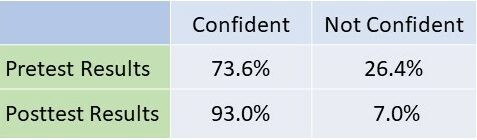
Before the lesson, 73.6% of students reported feeling confident in understanding their mental health. Students then engaged in the lesson, learning about the connection between anxiety and the nervous system as well as learning about healthy strategies to cope with anxiety. After the lesson, students took a post-test with the same questions as the pre-test. In the post-test, 93% of students reported feeling confident in understanding their mental health – about a 26% increase over pre-test baseline. On the post test, students were also asked how they would improve mental health at school. Four clear themes emerged: decrease phone and social media use, increase exercise and outdoor exposure, engage in more effective learning regarding mental health, and increase awareness around mental health and normalize mental health issues. While the first two themes are largely dictated by individual student behavior, the second two themes highlight opportunities for systemic change at Ralston Valley.
Table 2
Students’ Opinions About the Statement “Mental health lessons should be a larger part of the curriculum at RVHS.”
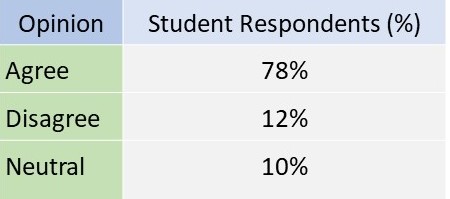
Students were also asked how they felt about mental health lessons becoming a larger part of the curriculum at Ralston Valley. 78% of student respondents said they would want mental health lessons to become a larger part of the curriculum while only 12% of students were against this idea. The remaining students, approximately 10%, reported neutral feelings. It is evident that mental health lessons are effective when integrated into areas of relevant core content and that students approve of this change. As the hypothesis suggested, integrating mental-health lessons directly into a relevant core class is shown to be an effective method of teaching about mental health. Furthermore, students are more willing to participate in and engage in mental health lessons integrated into core classes as they are learning about mental health topics that are relevant and beneficial to them.
Cycle 3: Teacher Questionnaire
Student responses in Cycle 2 highlighted that students believe mental health lessons should be a larger part of the curriculum at Ralston Valley. Researchers determined it was essential to gather teachers’ and staffs’ opinions about further integrating mental health elements into portions of the core curriculum. A questionnaire (see Figure 1) was sent out to the staff at Ralston Valley regarding mental health in school. Teachers were asked a series of questions regarding their feelings about the importance of mental health in school, how much they believe mental health affects academic performance, and their perception of how well Ralston Valley students are supported.
Figure 1
Teacher Survey: Mental Health Stigma at Ralston Valley High School
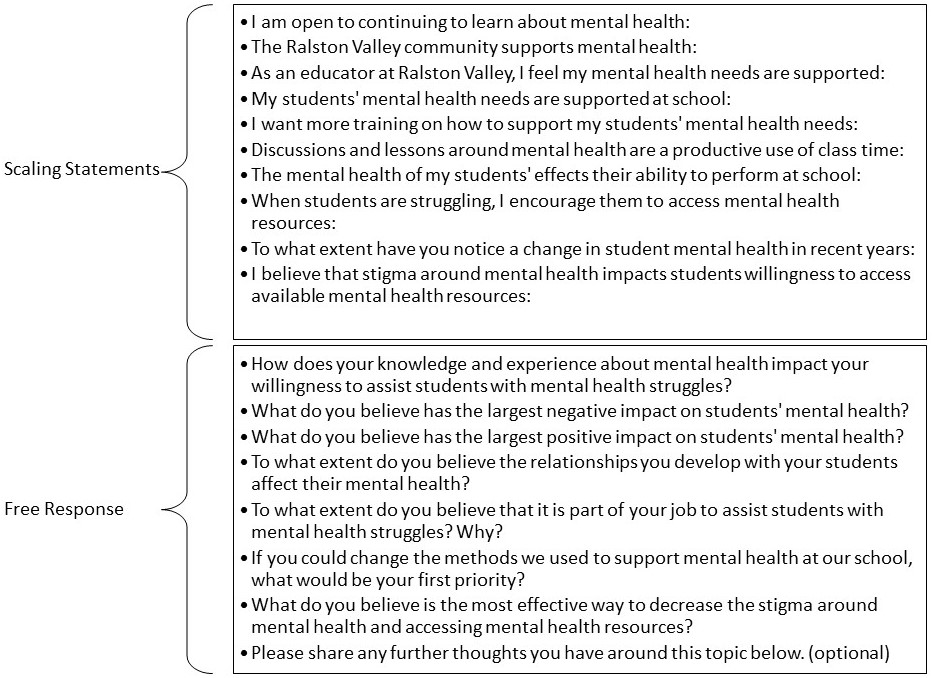
Of the teachers who responded, 100% agreed that their students’ mental health affects their ability to perform at school. It is clear there is a high degree of mutual understanding that mental health is not only important but has a significant impact on how students navigate their school environment. Furthermore, 100% of teacher respondents are willing to learn more about mental health and 95% would like more training around supporting their students’ mental health. This clearly illustrates that teachers believe it is important to implement positive mental health practices into the classroom.
However, the perspectives of teachers and students around the severity of mental health struggles at Ralston Valley differ significantly. In comparing the teacher questionnaire to the student needs assessment: 95% of teacher respondents felt their students’ mental health needs were supported, while in reality, more than 40% of students reported suffering from consistent feelings of depression and/or anxiety. There is a disconnect between student experience and the teacher perspective of student experience. However, both parties believe mental health is important and implementing more programming around mental health might serve the community in a beneficial way. The student research team wanted to leverage these findings and better understand what it might look like for teachers to obtain more training and how that training might be deployed in the classroom on a consistent basis.
Cycle 4: Observational study of student success in courses with instructors receiving specific training to support adolescent wellness
At the conclusion of Cycle 3, the student research team shared a project update with the entire staff at Ralston Valley. One of the conclusions that the research team shared with the faculty at that moment, was that there were significant opportunities to normalize and destigmatize mental health. Teachers were asked to reflect on the presentation and how they might be a catalyst to this change. Two teachers approached the YPAR team and shared their intention to engage with formal SEL training via the Upstream Mental Health Fellowship during the 2023-2024 school year. These teachers offered to provide access to the application of that learning in their classrooms throughout that process. As such, a secondary question was formed in the analysis of relevant data from our first three cycles: What would the model of normalizing or destigmatizing access to mental health resources look like in the classroom? Researchers observed classes taught by fellowship trained teachers and classes taught by non-fellowship trained teachers. Several qualitative observations were made about students involving their body language, overall engagement (with the class and others), and level of focus. In addition, researchers made qualitative observations about the teachers on their body language, engagement level, and interaction with students. These observations allowed for comparison of environments led by teachers in the Upstream Fellowship and those environments led by teachers not participating in the fellowship. Three different Algebra I classes were observed: one with a teacher participating in the fellowship training and two without. Three World Geography classes were observed: one with a teacher participating in fellowship training and two without. At least two researchers observed each class taught by a fellowship teacher, and at least one researcher observed each class taught by a non-fellowship teacher. The expectation among researchers was that there would be some palpable, measurable, or otherwise visible difference in these environments, based on the mental health knowledge of the classroom instructor. However, there were not any clear differences observed between the classrooms led by teachers with the fellowship training and those teachers without the training. In the Algebra classes, all researchers observed students’ body language to be bored and tired. Few students answered questions, and most seemed unengaged with the lesson. Researchers also noted similar behaviors of the teacher volunteers during the observation of their classroom: enthusiastic tone, walking around the classroom, and engaging one on one with students. The same held true in the World Geography classes. Students were bored, but mostly on task in both the fellowship led and non-fellowship led classroom environments. Teachers were also observed to be enthusiastic and engaged in all classrooms. It must be noted, however, that due to the researchers’ and teachers’ time constraints, only a limited number of classes were observed. One of the limitations of these observations, then, is that researchers were only able to observe a limited number of classes. Because researchers were only able to observe some classes, the full environment and culture of each classroom was not able to be established. The actual qualitative data collected by researchers shows no clear difference between the classrooms with fellowship training and classrooms without.
However, in addition to the qualitative observations made on both types of classrooms, quantitative data was also collected around students’ average grades to determine the effect of teachers with fellowship training on students’ academic achievement. The research team used descriptive statistics (mean, median, range and standard deviation) as well as an independent two sample t-test to try and better understand the relative impact of the teacher on student learning outcomes. It was hypothesized that students would demonstrate better academic outcomes if taught by a fellowship trained teacher. All 9th grade students who chose to take World Geography were randomly assigned to a teacher – either a fellowship trained teacher or a non-fellowship trained teacher. The average final grade data of each class was collected.
Table 3
Final Grades – World Geography
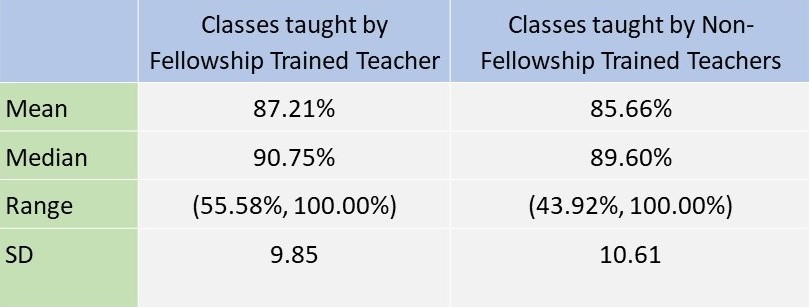
The fellowship trained teacher taught four classes of World Geography. Together, these four classes had a final grade average of 87.21%. Collectively, the non-fellowship trained teachers also taught four classes of World Geography. Together, these four classes had a final grade average of 85.66%. While the mean and standard deviation illustrate encouraging trends, with the fellowship teachers having a 1.55% higher grade than non-fellowship teachers, the trend did not show statistically significant differences, t(29) = 1.97, p = .25. That is, students in World Geography classes with a fellowship trained teacher did not perform significantly better than classes with a non-fellowship trained teacher.
However, the Algebra 1 classes showed a different pattern (see Table 4). To test the hypothesis that students would perform better academically if taught by a fellowship trained teacher, all 9th grade students who chose to take Algebra 1 were randomly assigned to a teacher – either a fellowship trained teacher or a non-fellowship trained teacher. The average final grade of each class was collected. The fellowship trained teacher taught one class of Algebra 1 which had a final grade average of 83%. Collectively, the non-fellowship trained Algebra 1 teachers taught ten classes of Algebra 1. Together, these classes had a final grade average of 79%. There was a 2.347% difference in the final grade averages, with the classes with a fellowship trained teacher achieving a higher final grade on average.
Table 4
Final Grades – Algebra 1
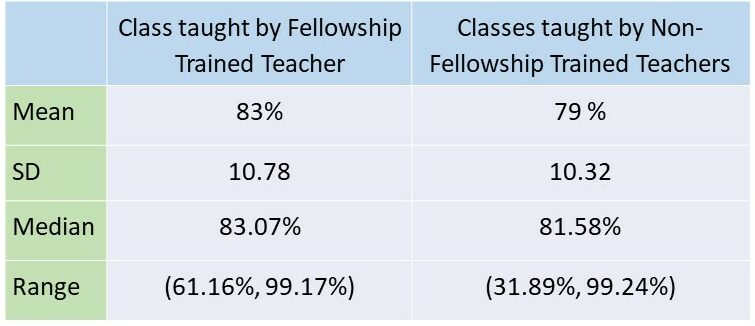
In the case of Algebra I, there was a statistically significant difference between the two classes: the class taught by fellowship trained teachers performed higher than the classes taught by a non-fellowship trained teacher, t(29) = 1.99, p = .03. The result indicates that students in Algebra 1 classes with a fellowship trained teacher performed better academically, on average, than students in classes with a non-fellowship trained teacher.
It must be noted, however, that this observational study took place over a short period of time. Students in classes taught by fellowship trained teachers were only in the observed classes about four hours a week. Furthermore, the data from these classes only covers one semester of learning. If students had a fellowship trained teacher for two semesters or even multiple years, there may be higher levels of academic achievement stemming from the additional mental health support, or there may simply be a bump in performance from a relationship that is developed over a longer period of time. While there were too many variables to isolate during this cycle of research, there appears to be some evidence that prioritizing relationships and overall student wellness matters to how students perform in the classroom. More observational research and learning around this topic is necessary to better determine whether this type of intervention leads to greater positive effect on students.
Recommendations and Future Considerations
In conclusion, the current methods of mental health education must be revamped and improved in order to help reduce the stigma around accessing mental health resources at school. The topic of mental health is embarrassing and taboo to many students, making it all the more imperative to create an environment in which students feel comfortable discussing mental health. One way to make learning about mental health a more approachable topic is to discuss aspects of mental health in relevant environments. Students are more eager and ready to learn about mental health when the topic is paired with a subject they value and/or a teacher they are comfortable with. When the topic of mental health is connected to the curriculum in a more meaningful way, it seems less scary and more approachable to students. More discussion and learning are likely to decrease uncertainties, and is likely to produce a trickle-down effect, thereby reducing mental health stigma in the school community. More frequent time spent on the subject would also make the ideas feel much less foreign to students, thus naturally decreasing negative judgment from others. Furthermore, more in-depth and specific training for staff members may be necessary to create more dynamic environments that are attuned to student mental health needs. It is clear that the Ralston Valley High School staff cares deeply about the mental health of their students. However, it is also clear that staff opinions around students’ mental health varies drastically from students’ views. Staff members must be informed about the true mental wellbeing of their students and be given the tools necessary to help support their students. This professional development may come in a form similar to the Upstream Mental Health Fellowship mentioned in the fourth cycle of this project.
It is unrealistic to devote dozens of hours of school time to teach about mental health. Instead, having teachers implement mental health support techniques into their classroom is a potentially more productive and effective method of supporting students’ mental health. There must be more learning in this area to determine how effective this technique is. Furthermore, district leaders must consider making relevant mental health education required for all students. This could be implemented in several different ways.
- Students are consulted on how to best incorporate mental health literacy into the curriculum.
- A sufficient number of teachers receive training in how to implement effective mental health support into their everyday classroom. This could look like annual professional development training at a district or even state level. With a sufficient number of teachers implementing effective mental health support into their classroom, it is likely students will feel more supported in their mental health at school.
- Students must be required to take a health class which teaches relevant lessons about both physical and mental health. Throughout Jefferson County and many other major school systems, health is not a course requirement for graduation. However, there are Colorado state mandates for local school systems to teach students health related content, including healthy relationships, safe sex and impacts of drug and alcohol use prior to the conclusion of 10th grade. By requiring health for graduation, students would share a common space to learn more about their mental and physical health, with stakes that are more likely to impact overall mental health knowledge and literacy among adolescents.
Through implementation of one or more of these methods, students’ knowledge around mental health would likely improve and as a result, help to destigmatize the topic. It is essential to remember that stigma is often derived from individual perceptions, and as such are difficult to change. Still, more effective mental health education in schools will slowly chip away at the stigma and eventually support more community members in their overall comfort with accessing mental health resource.
References
Barwick, A., Chigwada, S., Giecco, M., Seeney, E., Turner, I., & McPartlan, D. (2023, May 21). How staff and young people relationships impact school mental health self-referral. Social Publishers Foundation. https://www.socialpublishersfoundation.org/knowledge_base/how-staff-and-young-people-relationships-impact-school-mental-health-self-referral/
Bulanda, J. J., Bruhn, C., Byro-Johnson, T., Zentmyer, M. (2014, May). Addressing Mental Health Stigma among Young Adolescents: Evaluation of a Youth-Led Approach. Health & Social Work, [s. l.], v. 39, n. 2, p. 73–80, 2014. DOI 10.1093/hsw/hlu008. Disponível em.
Mellor C. (2014). School-based interventions targeting stigma of mental illness: systematic review. Psychiatry Bull (2014). 2014 Aug;38(4):164-71. doi: 10.1192/pb.bp.112.041723. PMID: 25237538; PMCID: PMC4115419.
Stanford, L. “Students Are Missing School Because They’re Too Anxious to Show Up.” Education Week, vol. 43, no. 10, 1 Nov. 2023, pp. 12–13. Academic Search Premier, EBSCOhost.
Vila-Badia, R., Martinez-Zambrano, F., Arenas, O., Casas-Anguera, E., Garcia-Morales, E., Villellas, R., Martin, J. R., Perez-Granco, M. B., Valduciel, T., Casellas, D., Crecia-Franco, M., Miguel, J., Balsera, J., Pascual, G., Julia, E., & Ochoa, S. (2016). “Effectiveness of an Intervention for Reducing Social Stigma Towards Mental Illness in Adolescents.” World Journal of Psychiatry Vol. 6(2), 239-47. 22 Jun. 2016, doi:10.5498/wjp.v6.i2.239
Youth Mental Health: Trends and Outlook (2020, January 28). Behavioral Health / Maternal and Child Health. Infographics. https://nihcm.org/publications/youth-mental-health-trends-and-outlook
To cite this work, please use the following reference:
Namba, E., Pramov, C., Roepnack, S., Miller, A., Nies, B., Merkel, S. (2024, July 29). Addressing the Stigma Around Mental Health in Schools: Youth Participatory Action Research Study. Social Publishers Foundation. Addressing the Stigma Around Mental Health in Schools | Social Publishers Foundation